what we’re here to do,
and the difference it makes.
Our Yard at Clitterhouse Farm believes our community already holds the skills, energy and ideas it needs — it just needs a welcoming place to put them to work
What we’re here for
As set out in our Articles of Association, Our Yard exists to:
Build the capacity and skills of people in the socially and economically disadvantaged community of North West London, so they can better meet their own needs and take a fuller part in local life.
Regenerate a deprived area — through business support and affordable workspace, training and routes into work, preserving historic buildings, protecting the environment, and providing recreation and green space for all, especially those who need it most.
The community we’re part of
Clitterhouse Farm sits in the Brent Cross Cricklewood regeneration area, where most wards rank among the 50% most deprived in England — many in the top 30%. But statistics describe circumstances, not people. What we see every week is a neighbourhood full of talent and determination that simply hasn’t always had the space to flourish. Our job is to make room for it.
How we create public benefit
Everyone is welcome, and what people do here advances our charitable purposes:
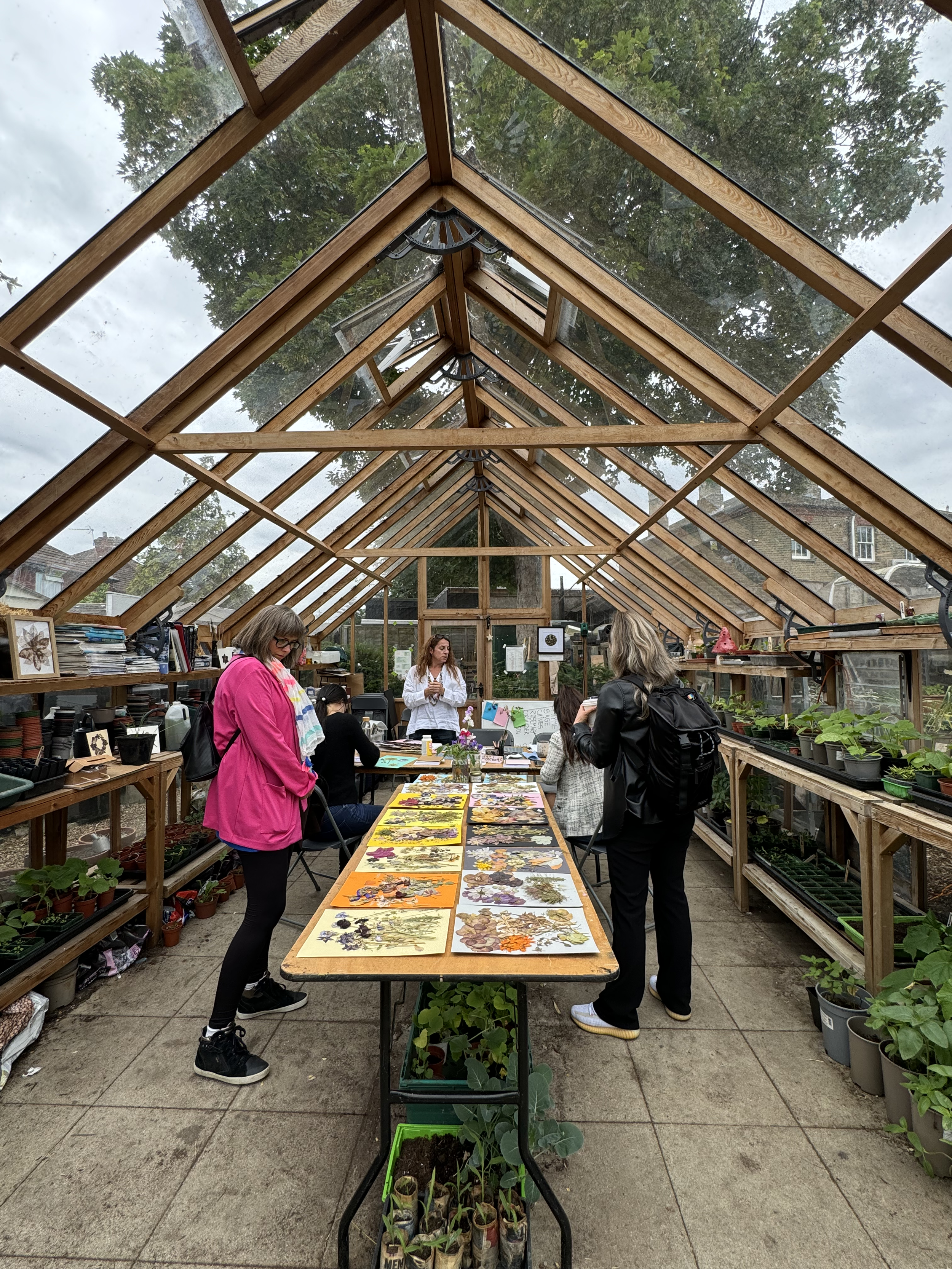
Volunteering in the garden, café and at events builds practical, accredited and transferable skills — and a route towards paid work (capacity building).
Affordable workspace helps local makers and micro-businesses start and grow (regeneration: workspace & business support).
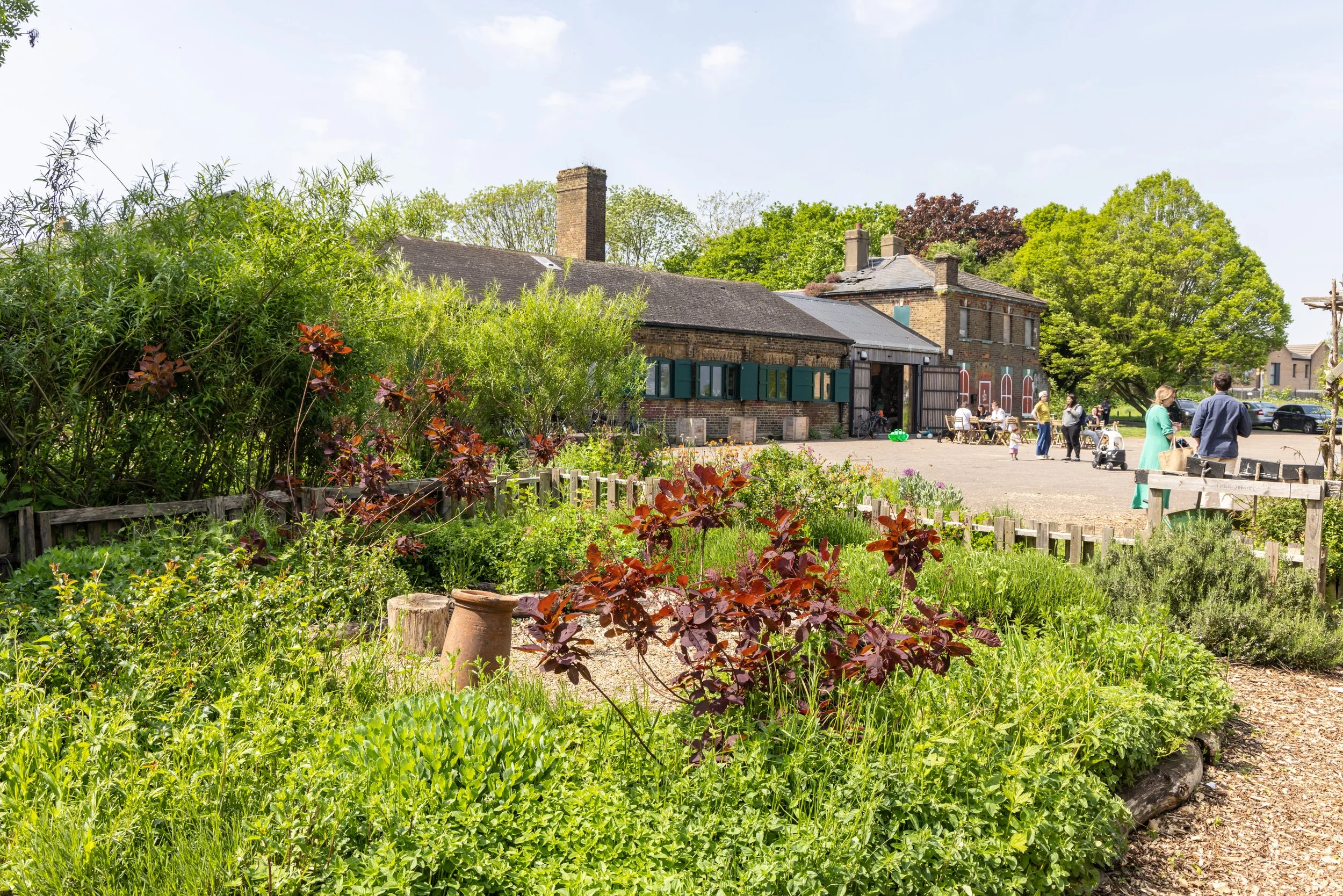
Restoring the farm buildings, with young people gaining qualifications, brings some of Barnet’s last surviving heritage buildings back into public use (regeneration: heritage).
The Secret River Sweepers, community composting, sustainable growing and the Zero Waste Kitchen care for our environment (regeneration: environment).
Free garden access, therapeutic gardening, a choir and family play give the whole community — especially those who most need it — somewhere green and welcoming (regeneration: recreation).
English practice, women-only sessions and activities across ages and faiths help people connect and belong (capacity building & inclusion).
We keep our doors open to those who often find them closed — reaching people through partners such as the Royal Free, Age UK, New Citizens Gateway, Beyond Autism and IKWRO. Around 70% of our volunteers are unemployed or have no recourse to public funds, and roughly a third are managing a health condition or real financial hardship.
Public benefit for everyone
The benefits we create — skills, confidence, connection, green space, heritage — belong to the whole community. Where individuals gain personally (a maker’s low-cost workspace, a volunteer who becomes staff), that’s not a loophole — it’s the point, and always incidental to the public good it helps create. Our trustees are unpaid, and taking part is free or genuinely affordable, so no one is priced out.
Our impact
8 volunteers have become paid employees on the farm
114 active volunteers, 95 new this year
13 City & Guilds qualifications earned by young people restoring the buildings
84 workshops and 6 community events this year
85+ people in our Gardening for Healing programme — 40 free sessions
9 tonnes of rubbish cleared from the Clitterhouse Brook, with 1,040+ volunteer hours (ages 3–83)
90%+ of participants report a positive impact on their health and wellbeing
Nationally recognised — Cultivation Street 2020 and the Open City Stewardship Awards 2022